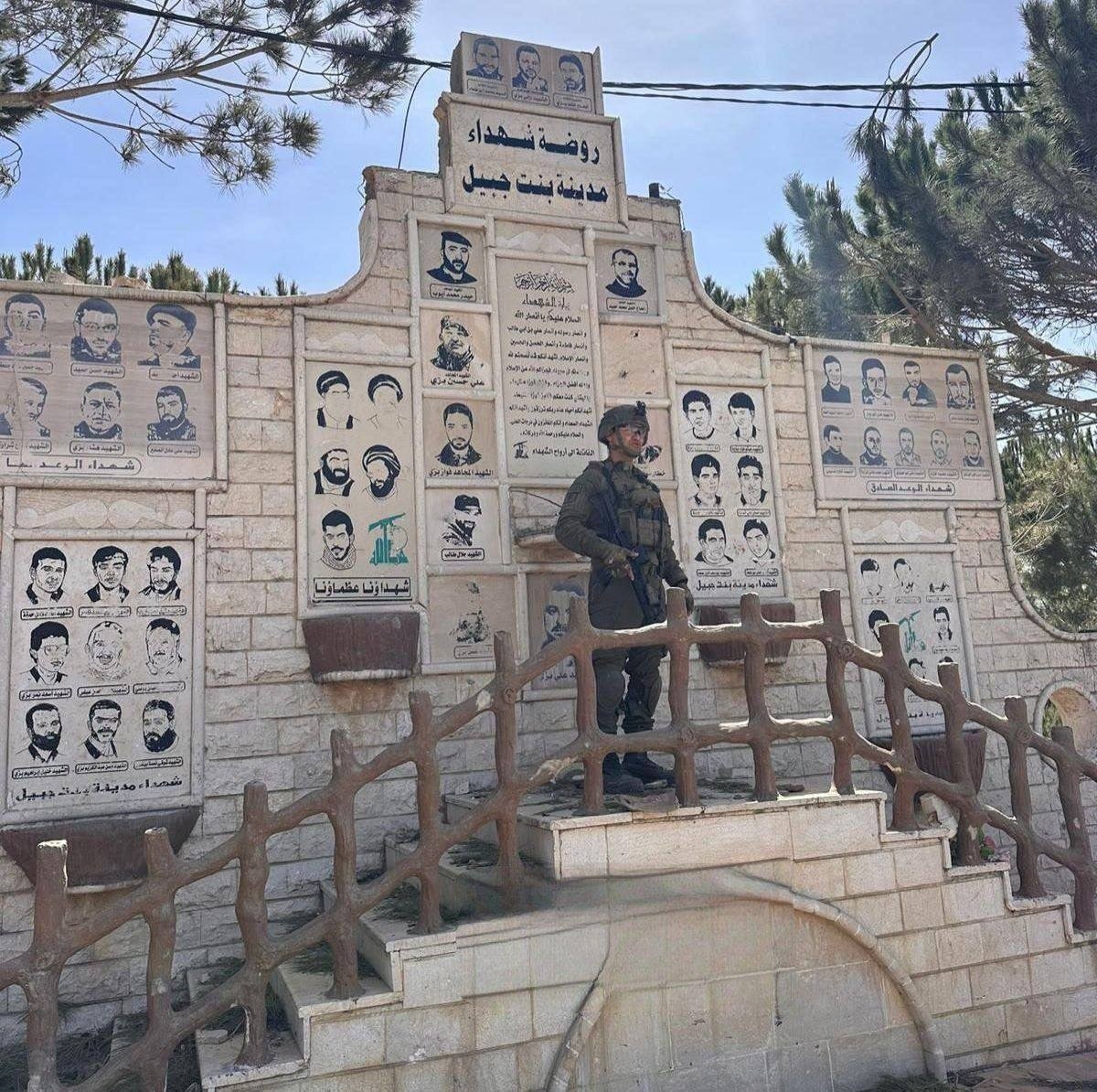
The most lethal incident of the day occurred in the southern Lebanese town of Bint Jbeil, where an Israeli Defense Forces (IDF) soldier was killed and three others wounded during a night‑time clash with Hezbollah fighters. The engagement, reported by the monitoring channel monitor_the_situation, marked the first IDF fatality in the current escalation and was accompanied by additional injuries: three soldiers seriously hurt, one moderately injured, and six lightly wounded.
"Israeli Soldier Killed, Three Injured in Southern Lebanon Fighting" – @AMK_Mapping_ (monitor_the_situation)
Ground Combat Casualties
Earlier in the night, the IDF reported a broader set of casualties across southern Lebanon. According to the JPost, ten Israeli soldiers were wounded, one of them in serious condition, and one soldier was killed during clashes with Hezbollah in the region. The same source noted that the IDF continued operations despite “small guerilla warfare threats” from the Lebanese militia.
"Ten IDF soldiers wounded, one seriously, and one soldier killed in southern Lebanon overnight" – JPost (https://www.jpost.com/middle-east/article-892972)
Additional ground‑movement reports from monitor_the_situation and idkunim_il confirmed that Israeli paratroopers and the 188th Armoured Brigade were actively engaged in Bint Jbeil and surrounding villages. Ten paratroopers were wounded in Bint Jbeil, with three sustaining serious injuries. The IDF also reported a separate nighttime encounter that left three soldiers seriously injured, one moderately injured, and six lightly injured elsewhere in southern Lebanon.
Airstrike Campaign
Simultaneously, the Israeli Air Force (IAF) launched a series of airstrikes targeting Hezbollah infrastructure and alleged militant positions across the south. At 07:25 UTC, strikes hit multiple towns, including villages previously identified as Nabatieh, Shabriha, and Bafliyeh. The monitor_the_situation channel documented the operation, emphasizing the use of precision air‑delivered munitions.
"Israeli forces conduct airstrikes on several towns across southern Lebanon amid ongoing cross‑border conflict with Hezbollah" – monitor_the_situation
Later in the day, at 08:16 UTC, an Israeli attack in the Sidon area resulted in three civilian deaths, as reported by the same channel. The strike was described as part of the broader “cross‑border exchanges” with Hezbollah, though no specific weapon system was disclosed.
At 16:41 UTC, Israeli forces expanded the campaign to the Tyre district, striking multiple sites. Video evidence shared by monitor_the_situation showed explosions and smoke over the coastal city, confirming the intensity of the operation.
In the village of Adshit, the IAF targeted what it described as “Hezbollah terror infrastructure” at 16:37 UTC. The strike followed a pattern of increased militant activity in the area, where Hezbollah had reportedly launched around 130 rockets toward Israeli positions since the start of Operation Roaring Lion.
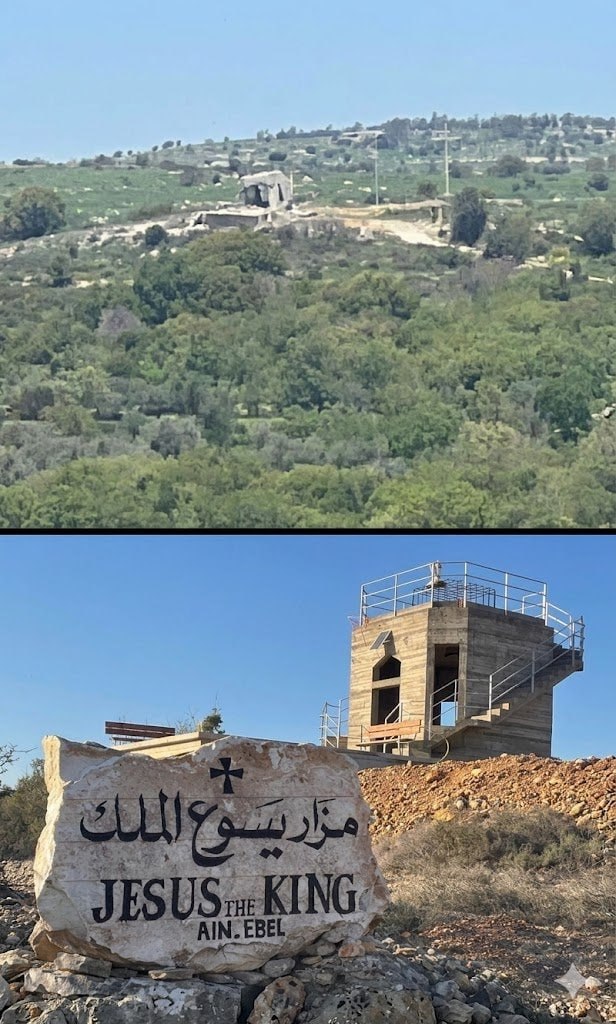
The shrine of “Jesus the King” in Ain Ebel was also hit by an IAF bomb at 15:25 UTC, according to BellumActaNews. Photographic evidence showed damage to the religious site, raising concerns about cultural heritage protection amid the conflict.
Hezbollah Anti‑Air Operations
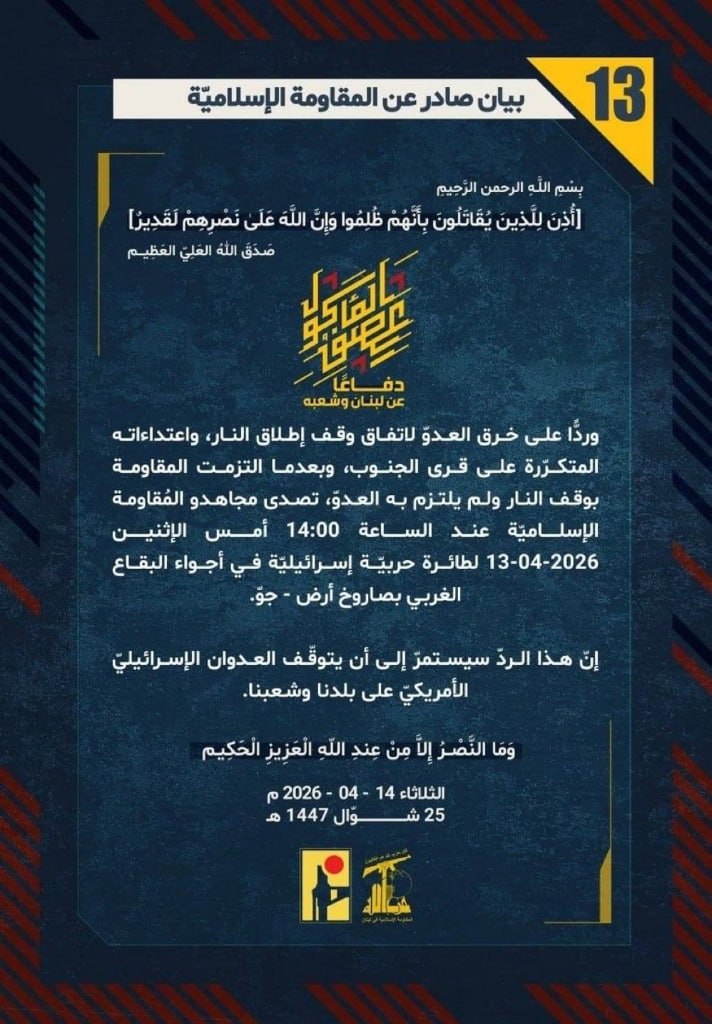
Hezbollah claimed a series of successful anti‑aircraft engagements during the same period. On April 11, the group announced the downing of an Israeli HERMES‑450 unmanned combat aerial vehicle (UCAV) over Seddiqine using a surface‑to‑air missile (SAM). The claim was reiterated on April 12, when Hezbollah said it engaged an Israeli fighter jet over the Bekaa Valley with a SAM.
"Hezbollah has announced the downing of an IAF 'HERMES-450' UCAV in southern Lebanon's 'Seddiqine' using a SAM" – GeoPWatch
On April 13, Hezbollah further asserted that it shot down an Israeli fighter jet over western Beqaa with a surface‑to‑air missile, a statement shared by rnintel and accompanied by a photograph of the claimed wreckage.
In addition to missile engagements, Hezbollah reported the use of FPV (first‑person view) drones to target Israeli assets. An FPV drone allegedly struck an IDF HMMWV in Ain Ebel and a logistic truck in Kiryat Shmona, Israel, as detailed by GeoPWatch.
"Hezbollah has announced the targeting of an IDF 'HMMWV' vehicle in southern Lebanon's 'Ain Ebel' using FPV drone" – GeoPWatch
Other Hostile Actions
Israeli artillery fire continued throughout the day, with the IDF reporting strikes on “terror targets” in southern Lebanon to neutralize immediate threats to northern Israeli communities. The artillery barrage was documented by idkunim_il, which highlighted the use of conventional artillery shells.
An Israeli drone strike at 11:58 UTC hit a motorcycle in southern Lebanon, though casualty details were not immediately released. The incident was logged by monitor_the_situation and underscores the ongoing use of unmanned aerial systems in the low‑intensity conflict.
Hezbollah also launched a ground infiltration near Khiam at 15:50 UTC, attacking Israeli military positions. Video footage shared by the monitoring channel showed armed fighters engaging Israeli troops, though no casualty figures were provided.
Operational Context
The series of kinetic events on April 14 reflects a marked escalation in the Israel‑Hezbollah front. Ground combat has resulted in the first Israeli fatality of the current cycle, while air operations on both sides have intensified, featuring precision strikes, anti‑aircraft missile use, and drone warfare. The involvement of multiple Lebanese towns—Bint Jbeil, Sidon, Tyre, Adshit, Ain Ebel, and Khiam—demonstrates the geographic spread of hostilities.
From an operational perspective, the IDF appears to be maintaining pressure on Hezbollah’s logistical and command nodes through coordinated air‑ground campaigns, while Hezbollah is leveraging asymmetric tactics, including SAMs and FPV drones, to contest Israeli air superiority. The reported downing of a HERMES‑450 UCAV, if verified, would represent a notable technical achievement for the Lebanese militia.
All events were reported by open‑source monitoring channels and mainstream media outlets, providing a multi‑source verification of the day's kinetic activity. The continued exchange of fire raises the risk of further civilian casualties and infrastructure damage, particularly in densely populated coastal areas such as Tyre and Sidon.