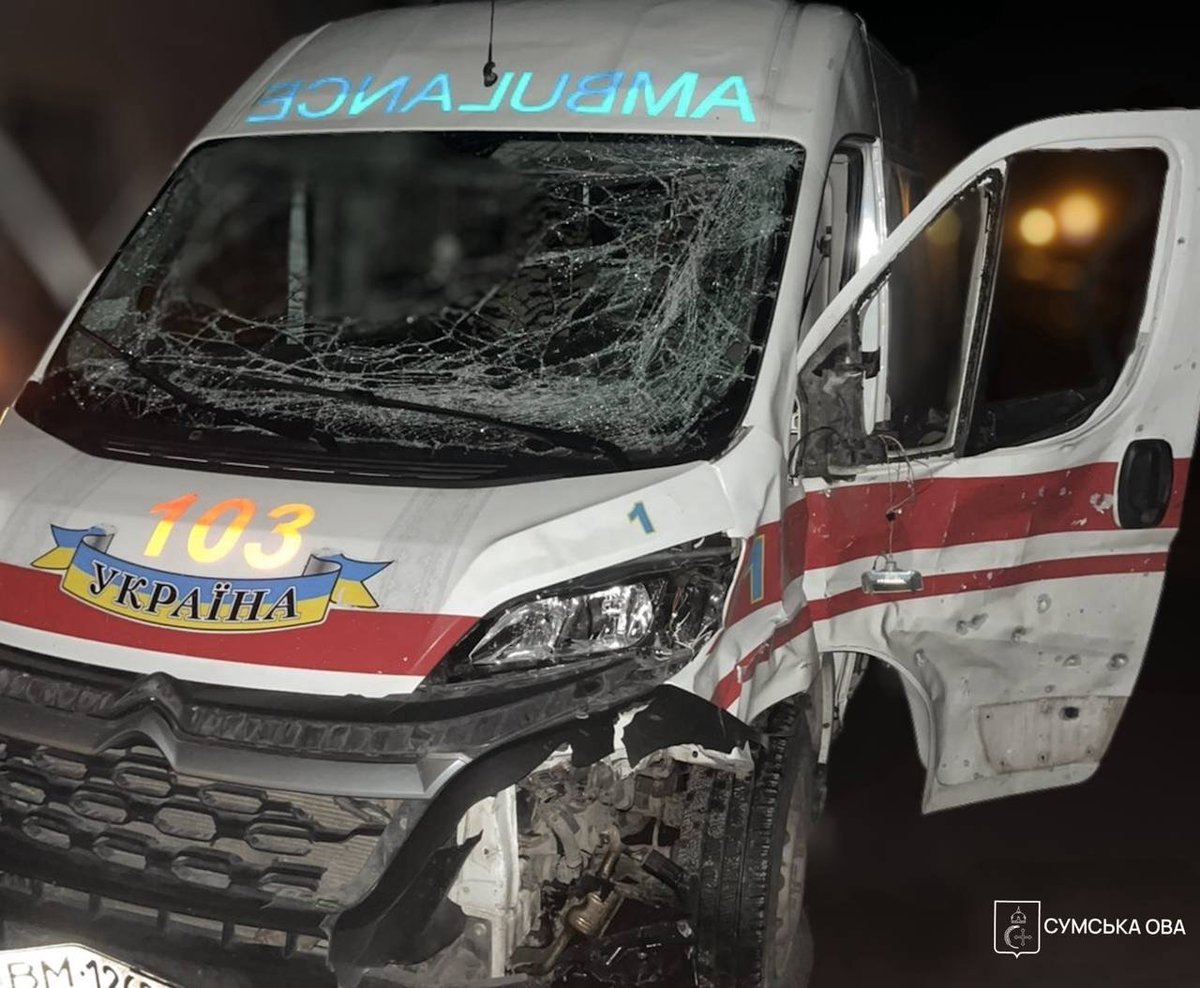
Despite the Easter ceasefire announced by the parties to the conflict, Russian unmanned aerial vehicles (UAVs) continued to target civilian medical assets in Ukraine on 12 April 2026. The most serious incident occurred in the Kharkiv Region, where a Russian drone struck an ambulance, injuring three paramedics. The attack underscores the fragility of the truce and the ongoing risk to humanitarian operations in the war zone.
Kharkiv Region Ambulance Attack
At 05:00 UTC, a Russian‑operated drone hit an ambulance traveling on a secondary road in the Kharkiv Region. The strike caused severe damage to the vehicle and wounded three paramedics who were providing emergency care to civilians in the area. No fatalities were reported, but the injuries required evacuation to a nearby hospital. The weapon used was identified as a standard combat UAV, consistent with previous Russian drone deployments in northeastern Ukraine.
Russian drone struck an ambulance in Ukraine's Kharkiv Region, injuring three paramedics despite the Easter ceasefire. The strike highlights ongoing violations in northeastern Ukraine amid the broader conflict. Source: monitor_the_situation, https://t.me/monitor_the_situation/9878
Key details: Location – Kharkiv Region, Ukraine; Time – 05:00 UTC; Casualties – three injured paramedics; Weapon – combat drone; Actors – Russian military UAV operators; Source – monitor_the_situation.
Sumy Oblast Ambulance Strike Near Hlukhiv
Earlier, at 04:45 UTC, a second UAV attack was recorded near the town of Hlukhiv in Sumy Oblast. The drone struck an ambulance that was en route to a local clinic. While the official report did not specify the number of casualties, the incident was classified as a violation of the Easter truce and was accompanied by photographic evidence of the damaged vehicle. The attack was attributed to Russian military forces operating UAVs for reconnaissance and strike missions in the northern front.
Russian drone strikes an ambulance near Hlukhiv in Ukraine's Sumy Oblast overnight, violating the Easter truce amid heightened reconnaissance and FPV drone activity in the area. Source: monitor_the_situation, https://t.me/monitor_the_situation/9874
Key details: Location – Hlukhiv, Sumy Oblast; Time – 04:45 UTC; Weapon – combat drone; Actors – Russian military; Source – monitor_the_situation.
Resumption of Drone Flights Over Kherson
At 04:49 UTC, Russian UAVs were observed flying over Kherson city in the southern Kherson Oblast. The aerial activity included FPV (first‑person view) drones, Krylo drones and standard reconnaissance platforms. Although no strikes were reported during this sortie, the presence of armed UAVs in the city’s northern suburbs and the Korabelnyi district signals a potential escalation and a testing of the ceasefire’s limits.
🟠 **Russia Resumes Drone Flights Over Kherson City, Ukraine** Russian FPV, Krylo, and reconnaissance drones reported over Kherson's northern suburbs and Korabelnyi district amid Easter truce, following a brief lull. No strikes reported yet. Source: monitor_the_situation, https://t.me/monitor_the_situation/9876
Key details: Location – Kherson, Kherson Oblast; Time – 04:49 UTC; Weapons – FPV, Krylo, reconnaissance drones; Actors – Russian UAV operators; Source – monitor_the_situation.
Analysis of Truce Violations
The pattern of attacks on ambulances in the Kharkiv and Sumy regions demonstrates a deliberate targeting of medical transport, which is prohibited under international humanitarian law. The injuries to paramedics in Kharkiv constitute a direct breach of the Geneva Conventions’ protections for medical personnel. The incidents occurred within a narrow time window, suggesting coordinated UAV operations aimed at undermining the ceasefire’s credibility.
In contrast, the drone flights over Kherson, while not resulting in immediate casualties, represent a strategic use of UAVs to maintain pressure on Ukrainian defenses without crossing the threshold of a lethal strike. This approach allows Russian forces to test the responsiveness of Ukrainian air‑defence systems and to gather intelligence on civilian movement patterns during the holiday period.
The continued use of UAVs for both kinetic and non‑kinetic purposes highlights the evolving nature of the conflict, where low‑cost, high‑mobility platforms can be employed to achieve tactical objectives while remaining below the radar of conventional air‑defence assets. The incidents also raise concerns for humanitarian organizations operating in the region, as the risk to ambulances and medical convoys may impede the delivery of essential care to civilians.
International observers have called for an immediate investigation into the ambulance attacks and for the parties to reaffirm their commitment to the Easter ceasefire. Until such measures are taken, the likelihood of further UAV‑related violations remains high, particularly in contested front‑line provinces where Russian reconnaissance activity has intensified.