On 12 April 2026, southern Lebanon experienced a concentrated wave of kinetic engagements involving the Israel Defense Forces (IDF), Hezbollah, and United Nations peacekeepers. The incidents, documented by multiple open‑source channels, illustrate a rapid escalation in both the scale and diversity of weapons employed, ranging from conventional artillery to precision‑guided anti‑tank missiles and kamikaze drones.
IDF uncovers Hezbollah weapons cache inside Bint Jbail Hospital
At 14:36 local time, IDF units entered Bint Jbail Hospital in the town of Bint Jbail and discovered a concealed Hezbollah weapons cache. The operation resulted in the death of "dozens" of Hezbollah combatants, according to JPost. The cache reportedly included small arms, explosives, and ammunition, though specific weapon types were not enumerated. The town holds symbolic significance for Hezbollah; it was the site where former secretary‑general Hassan Nasrallah once described Israel as "weaker than a spider web."
"WATCH: IDF finds Hezbollah weapons cache stored in Bint Jbail hospital, kills dozens of terrorists." – JPost, https://www.jpost.com/israel-news/defense-news/article-892722
Artillery shelling strikes Kafra, Yater and Braashit
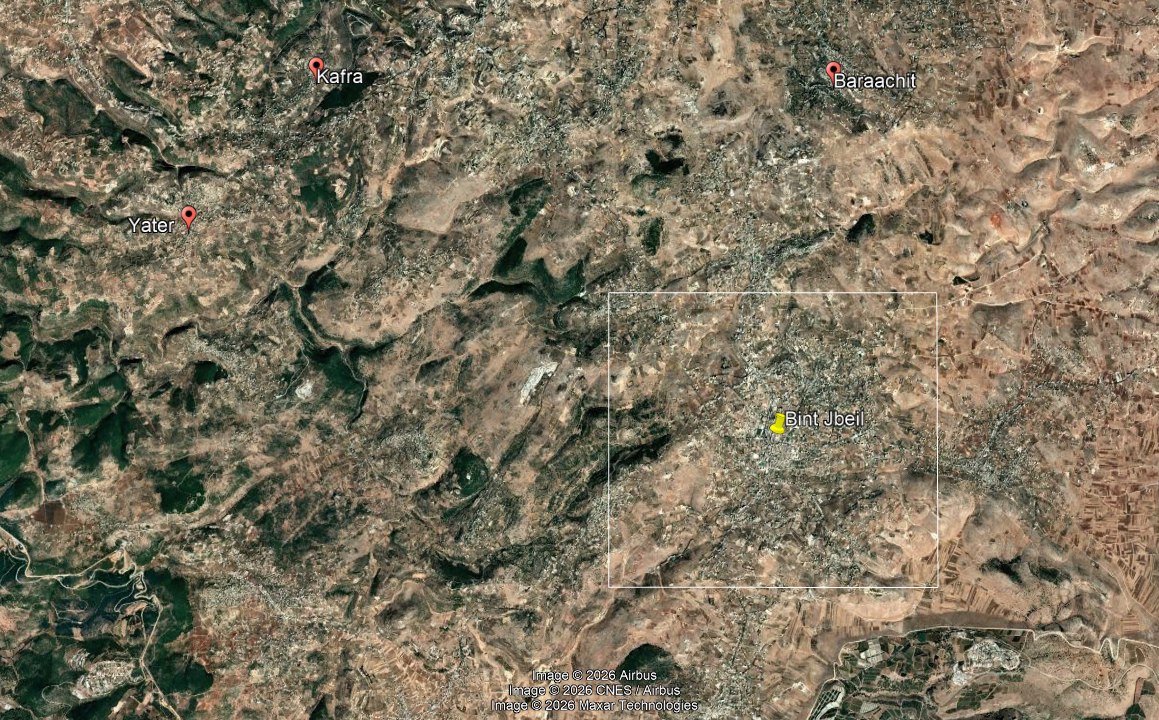
Earlier, at 12:10, artillery fire from Israeli positions hit the villages of Kafra, Yater and Braashit in the Bint Jbeil district. The shelling, reported by BellumActaNews, caused material damage but no confirmed casualties were released at the time. The weapons used were standard field artillery shells, underscoring the continued reliance on indirect fire in the border zone.
Source: BellumActaNews, https://t.me/BellumActaNews/170912
Hezbollah rockets target Israeli troop concentrations near Shmran Hill
Simultaneously, Hezbollah launched a salvo of rockets toward Israeli troop gatherings on Shmran Hill, a strategic high ground overlooking Bint Jbeil. The rockets were fired from within Lebanese territory and were intercepted by Israeli air‑defence systems, limiting casualties. The incident was also reported by BellumActaNews.
Source: BellumActaNews, https://t.me/BellumActaNews/170913
Israeli airstrikes hit two southern Lebanese towns
At 09:20, Israeli aircraft conducted strikes on two undisclosed towns in southern Lebanon, as reported by the monitoring channel monitor_the_situation. While the exact targets were not identified, the strikes were described as part of a broader campaign against Hezbollah infrastructure. No civilian casualty figures were released, but the presence of video footage suggests significant structural damage.
Source: monitor_the_situation, https://t.me/monitor_the_situation/9919
Israeli raid on Maaroub kills six
At 06:58, Israeli ground forces entered the village of Maaroub in southern Lebanon, resulting in six fatalities, according to Lebanon's National News Agency as cited by monitor_the_situation. The operation involved a rapid incursion without reported use of heavy weapons, indicating a targeted raid rather than a broader offensive.
Source: monitor_the_situation, https://t.me/monitor_the_situation/9903
IDF tank rams UNIFIL vehicles in Bayada
Later in the day, at 17:04, IDF soldiers operating a Merkava main battle tank rammed two United Nations Interim Force in Lebanon (UNIFIL) vehicles on a road leading to Bayada. The incident caused significant damage to the peacekeeper vehicles and was accompanied by warning shots fired by the tank crew. The action was documented by rnintel and raises concerns about the safety of UN personnel operating in contested corridors.
Source: rnintel, https://t.me/rnintel/59092
Hezbollah kamikaze drone strike in Taybeh
At 16:01, Hezbollah deployed a kamikaze (suicide) drone against Israeli soldiers stationed in Taybeh. The drone impacted the Israeli position, causing injuries but no confirmed fatalities. The use of loitering munitions reflects a tactical shift toward low‑cost, high‑impact weapons in the border conflict.
Source: monitor_the_situation, https://t.me/monitor_the_situation/9973
Hezbollah ATGM attack on IDF infantry and medevac unit in Bayada
At 15:26, Hezbollah released video footage showing an attack on an IDF infantry formation and a subsequent medevac convoy in Bayada using an ALMAS NLOS (non‑line‑of‑sight) anti‑tank guided missile. The missile system, capable of precision strikes from concealed positions, reportedly struck the convoy, though casualty numbers were not disclosed.
Source: GeoPWatch, https://t.me/GeoPWatch/31134
Additional rocket fire and ground advances
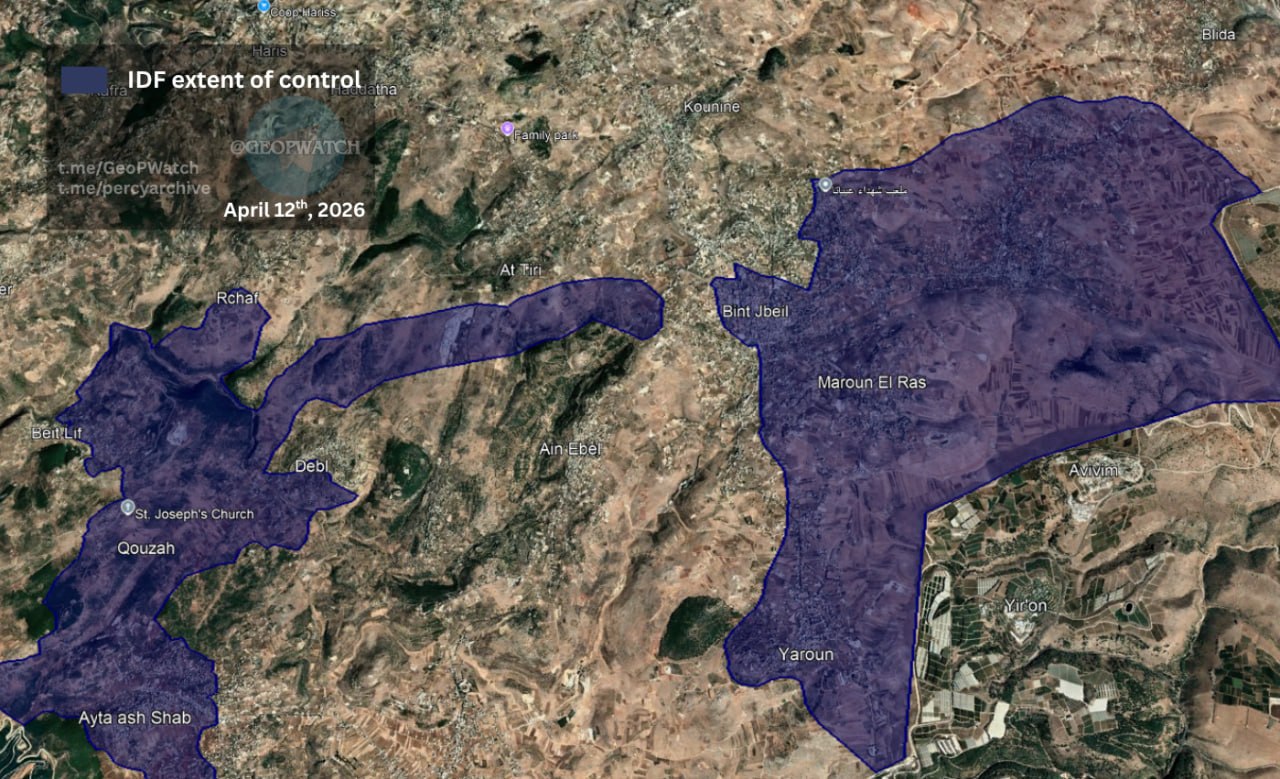
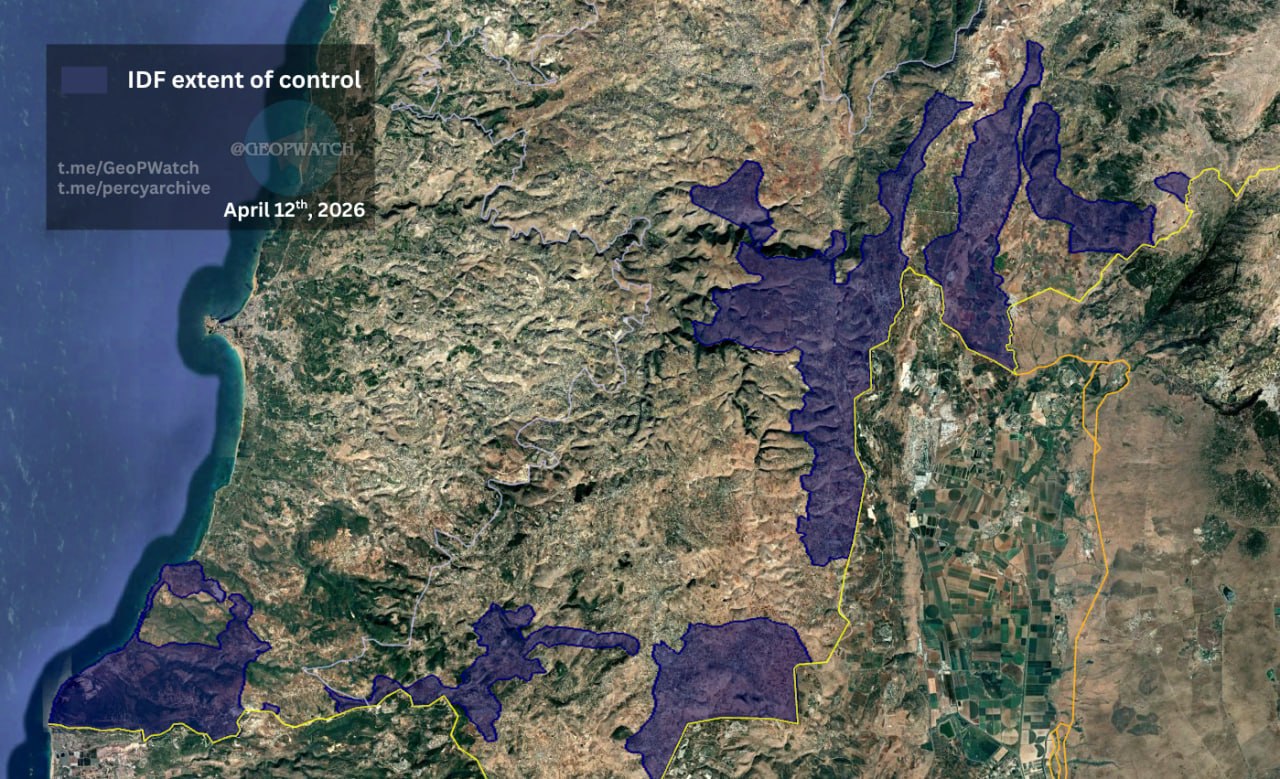
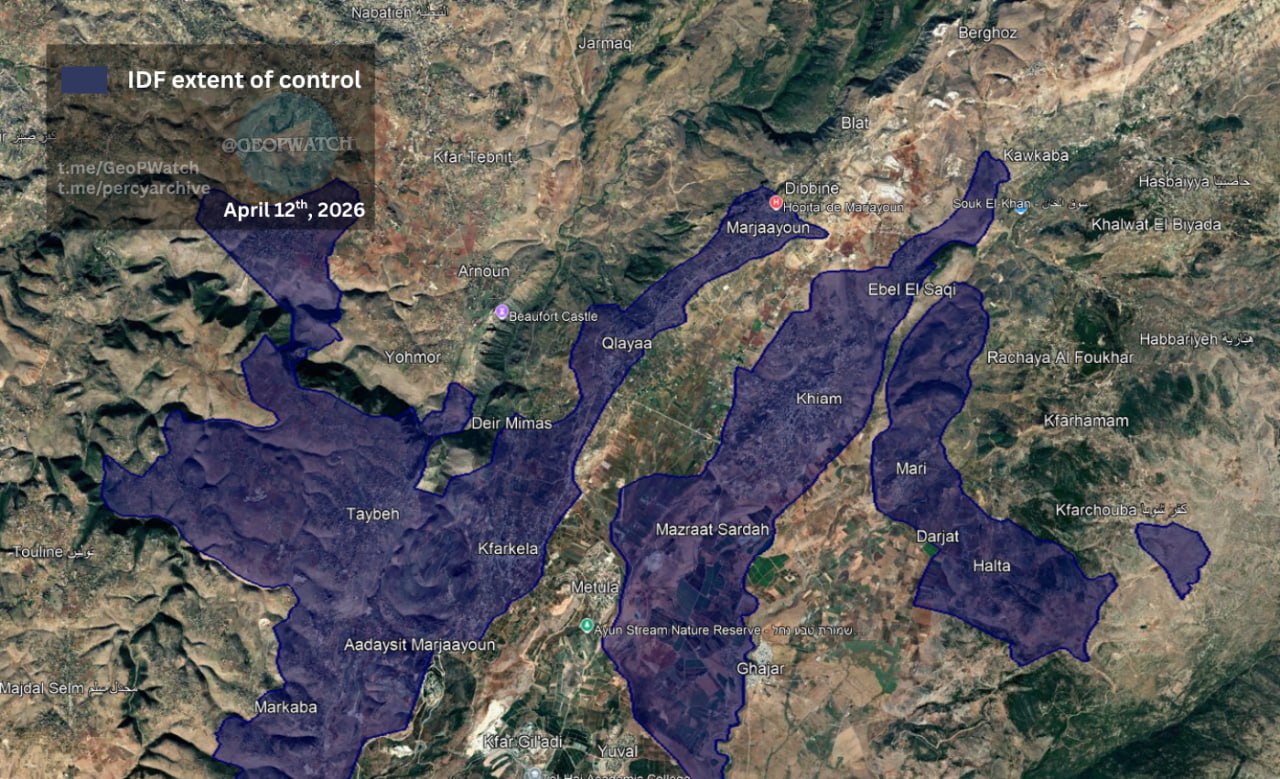
Throughout the afternoon, Hezbollah launched multiple rockets at Israeli positions across southern Lebanon (14:41), while the IDF reported continued ground movement, including the capture of Khiam, crossing of the Litani River, and a siege of Bint Jbeil as part of a broader northward push (14:26). These movements were captured in a series of photographs posted by GeoPWatch.
Source: GeoPWatch, https://t.me/GeoPWatch/31127
Collectively, the events of 12 April demonstrate a marked intensification of kinetic activity along the Israel‑Lebanon border. The convergence of conventional artillery, precision‑guided missiles, unmanned aerial systems, and direct ground engagements suggests both sides are expanding their operational repertoires while maintaining a high risk of civilian harm.