On 11 April 2026 the Israeli Air Force launched a coordinated series of airstrikes that hit more than 200 Hezbollah‑identified targets across southern Lebanon. The operation, reported by the monitoring channel monitor_the_situation at 13:21, marks the most extensive aerial assault of the current conflict phase and underscores the intensifying kinetic exchange along the Israel‑Lebanon border.
Scale and Scope of the 13:21 Air Campaign
The strike package, described as “over 200 Hezbollah terror targets,” focused on command‑and‑control nodes, weapons depots, and logistical infrastructure supporting Hezbollah’s ground forces. No specific weapon systems were disclosed for the Israeli aircraft, but the volume of targets suggests the use of precision‑guided munitions from fighter‑borne platforms. The channel posted a video of the attacks (source https://t.me/monitor_the_situation/9775), confirming the breadth of the operation.
"Israeli Air Force conducted strikes on more than 200 Hezbollah terror targets in the past day, continuing attacks on infrastructure to support ground forces operating in southern Lebanon," – monitor_the_situation
While the official Israeli statement did not release casualty figures for this specific wave, the cumulative effect of the day’s air activity contributed to a rising death toll in the region.
Earlier High‑Impact Airstrikes and Ground Engagements
At 11:50 local time, another Israeli airstrike in southern Lebanon resulted in ten civilian deaths, according to the same monitoring channel (https://t.me/monitor_the_situation/9764). The strike was part of a broader pattern that, according to the channel, has already eliminated over 180 Hezbollah militants in recent operations.
Concurrently, Israeli ground forces engaged in close‑quarter combat. At 11:12 UTC, Israeli paratroopers from the 35th Paratroopers Brigade raided a building in southern Lebanon, killing two Hezbollah fighters and wounding two Israeli soldiers. The IDF released footage of the raid, which also showed a follow‑up drone strike that killed at least two additional Hezbollah combatants (https://t.me/intelslava/86416).
"Two soldiers from the brigade were moderately wounded, and at least two Hezbollah fighters were killed in a follow‑up drone strike," – intelslava
In Bint Jbeil, a historic Hezbollah stronghold, four heavy Israeli airstrikes were recorded at 11:12 UTC, though no casualty numbers were provided (https://t.me/BellumActaNews/170846).
Hezbollah’s UAV and Anti‑Tank Countermeasures
Hezbollah responded with a series of loitering‑munition and kamikaze drone attacks targeting Israeli positions. At 16:59 UTC, Hezbollah released video of a loitering‑munition strike on an IDF‑used house in Al‑Bayyada, southern Lebanon (https://t.me/intelslava/86415). Earlier, at 14:45 UTC, drones struck the towns of Al‑Majadel and Tebnine, further illustrating the use of unmanned systems by both sides (https://t.me/monitor_the_situation/9786).
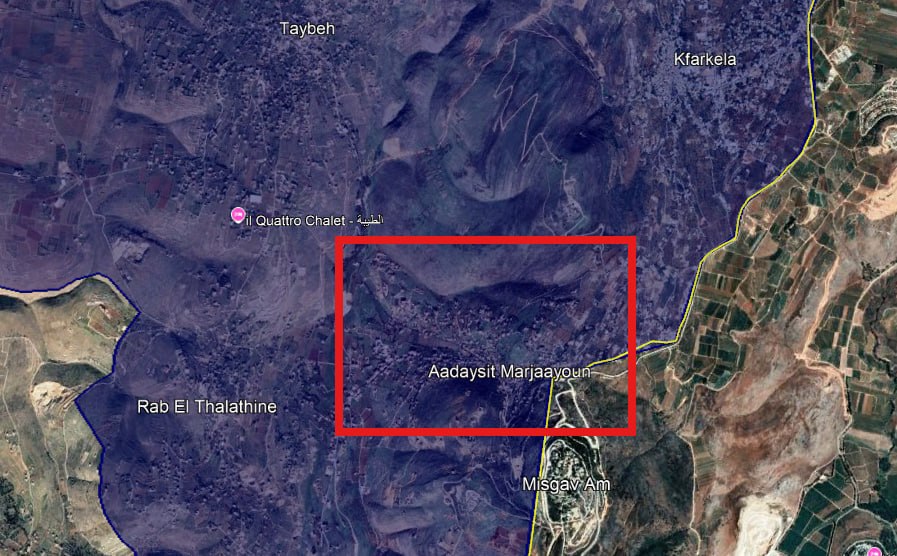
Hezbollah also claimed successful anti‑tank operations. At 13:45, the group announced the destruction of an Israeli Merkava main battle tank in Bint Jbeil using an anti‑tank guided missile (ATGM) (https://t.me/GeoPWatch/31078). A separate report from GeoPWatch documented the use of FPV drones to target two Merkava tanks in the same town at 11:48 and 12:20 (https://t.me/GeoPWatch/31064). In the border town of Aadaysit Marjaayoun, Hezbollah said an ATGM followed by an FPV drone destroyed another Merkava at 02:00 UTC (https://t.me/GeoPWatch/31058).
Urban Mobilization and Civilian Impact
Beyond kinetic exchanges, Hezbollah organized a motorcycle convoy through Sunni‑majority neighborhoods in Beirut at 16:38 UTC, a move interpreted as a show of force and an attempt to project influence within Lebanon’s capital (https://t.me/BellumActaNews/170863).
Explosions and gunfire were reported in Bint Jbeil at 11:12 UTC, indicating ongoing skirmishes that have not yet been fully documented (https://t.me/BellumActaNews/170849). The cumulative effect of air, ground, and UAV actions has heightened civilian risk, especially in densely populated towns such as Al‑Bayyada, Al‑Majadel, and Tebnine.
Assessment of the Day’s Kinetic Activity
The April 11 events demonstrate a multi‑domain escalation: high‑intensity air campaigns, targeted ground raids, and increasingly sophisticated UAV operations by Hezbollah. The Israeli strategy appears focused on degrading Hezbollah’s command infrastructure and limiting its capacity to launch conventional attacks, while Hezbollah’s counter‑measures aim to inflict material losses on Israeli armor and maintain a deterrent posture.
Casualty reporting remains fragmented. The ten‑person death toll from the 11:50 strike is the only confirmed figure for the day, but the combined effect of multiple airstrikes, drone attacks, and ground clashes likely resulted in additional, unverified casualties on both sides.
Overall, the kinetic tempo on 11 April 2026 reflects a deepening of the cross‑border conflict, with both parties employing a blend of conventional and asymmetric tactics. Continued monitoring of open‑source channels will be essential to track casualty trends, target selection, and the evolving role of unmanned systems in the theater.