On April 10, 2026, a series of high‑intensity kinetic events unfolded across several theaters, illustrating a marked escalation in the use of air‑delivered munitions, unmanned systems, and ground‑based rocket fire. The most extensive operation was reported by the Israel Defense Forces (IDF), which disclosed the deployment of 1,000 air force sorties delivering approximately 18,000 bombs in the ongoing Iran war. United States Central Command (CENTCOM) concurrently announced that U.S. forces had struck more than 13,000 targets in the same conflict, underscoring a coordinated, high‑tempo campaign against Iranian assets.
"The IDF dropped 18,000 bombs during Iran war" – JPost, https://www.jpost.com/israel-news/defense-news/article-892553
The scale of the Israeli and U.S. air campaigns represents the largest single‑day bombardment recorded in the Iran theater since the conflict began in 2024. Bombs were delivered by a mix of precision‑guided and unguided munitions, though the source did not specify the exact weapon types. The operation was described as part of a broader strategy to degrade Iran’s command‑and‑control infrastructure, air defenses, and logistical networks.
Ukrainian Strikes Disrupt Russian Logistics in Melitopol
In the southern Ukrainian theater, the Ukrainian Armed Forces conducted targeted strikes on the Russian‑occupied city of Melitopol, Zaporizhzhia Oblast, at 05:58 UTC. While casualty figures were not released, the attacks were confirmed to have disrupted Russian logistical corridors that support frontline units in the south. The strikes were reported by the Telegram channel monitor_the_situation and are part of a sustained Ukrainian effort to degrade Russian supply lines ahead of the upcoming spring offensive.
"Ukrainian strikes hit the Russian‑occupied city of Melitopol in Zaporizhzhia region, disrupting enemy logistics" – monitor_the_situation, https://t.me/monitor_the_situation/9505
Drone Activity in Eastern Ukraine and the Gulf
At 05:58 UTC, a hostile UAV attack was recorded over the occupied city of Dovzhansk in Luhansk Oblast. The incident, also sourced from monitor_the_situation, involved an unmanned aerial system that struck the city, adding to the persistent low‑intensity conflict in eastern Ukraine. No organization was directly claimed, and casualty details remain unverified.
Separately, at 04:57 UTC, Al Jazeera reported that Kuwait accused Iran and its proxies of launching a drone strike on Kuwaiti territory. Iran denied involvement. The incident highlights the broader regional tension surrounding Iranian proxy activities in the Gulf, though the specific target and damage assessment were not disclosed.
"Kuwait blames Iran for drone strike, Iran denies responsibility" – AlJazeera, https://www.aljazeera.com/video/newsfeed/2026/4/10/kuwait-blames-iran-for-drone-strike-iran-denies-responsibility?traffic_source=rss
Rocket Alerts Along Israel’s Northern Border
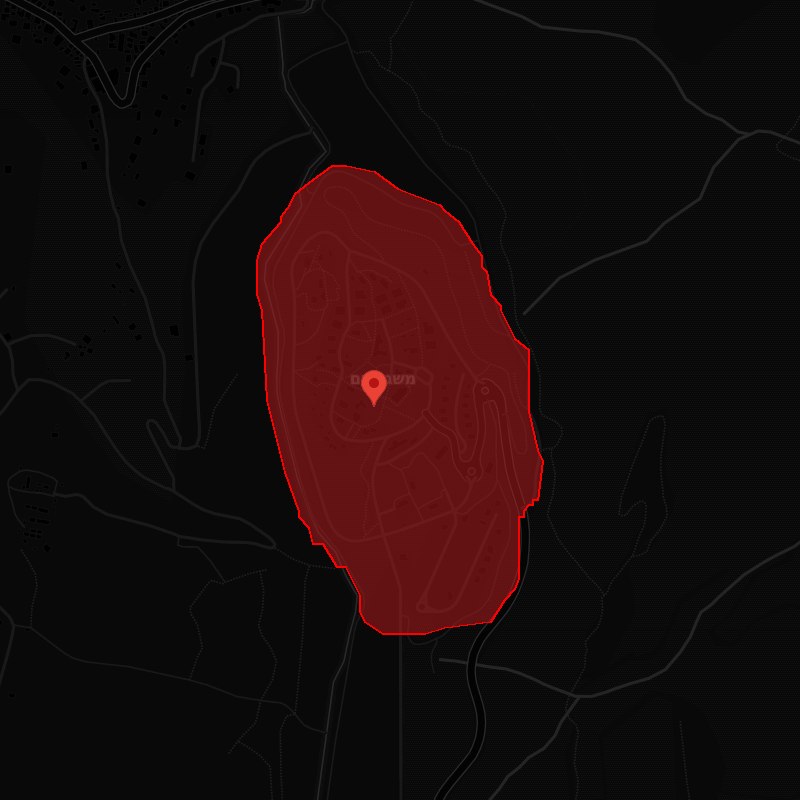
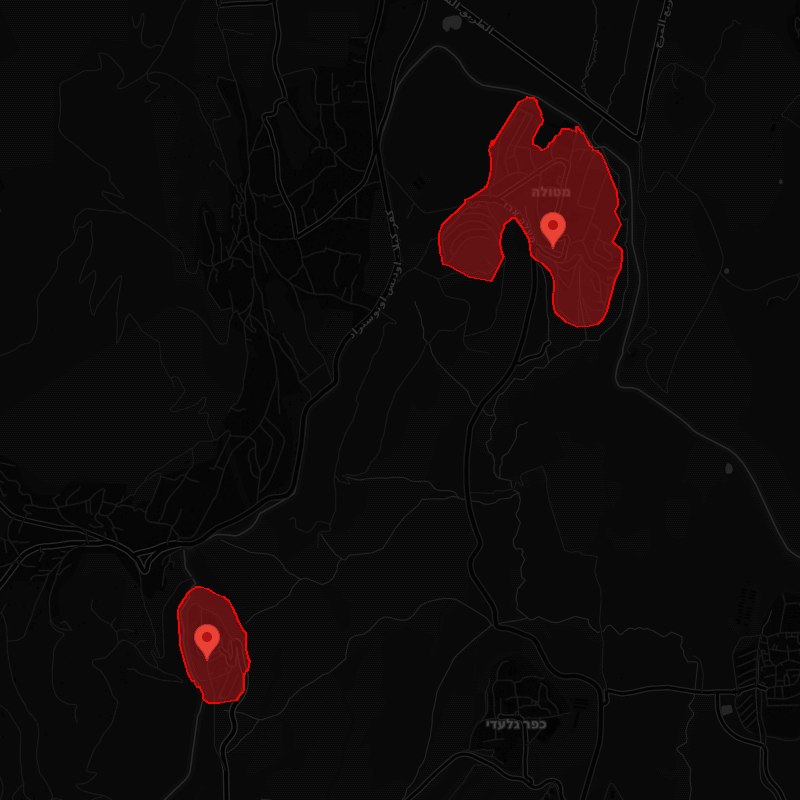
Two separate rocket alerts were issued by RocketAlert.live on April 10. The first, at 04:33 UTC, warned of rocket fire targeting the confrontation line between Misgav Am and Metulla. A second alert at 05:04 UTC indicated rocket activity near Misgav Am alone. Both alerts were accompanied by photographic evidence but did not specify the launch platform or casualty figures. The alerts underscore the persistent threat of short‑range rocket fire along Israel’s northern frontier.
"Rocket/Missile alert 2026-04-10 07:32:58: Confrontation Line: Misgav Am, Metulla" – RocketAlert, https://t.me/RocketAlert/28952
"Rocket/Missile alert 2026-04-10 08:04:20: Confrontation Line: Misgav Am" – RocketAlert, https://t.me/RocketAlert/28953
Hezbollah’s Ballistic Missile Demonstration
At 00:13 UTC, Hezbollah released video footage showing a short‑range ballistic missile strike on an IDF base in Karmiel, northern Israel. The missile identified in the footage was a Fath‑360 (BM‑120) SRBM, a system supplied by Iran and previously used in the 2023‑2024 Gaza conflicts. While the video confirmed the missile’s impact, independent verification of damage or casualties was not available at the time of reporting.
"Hezbollah has released footage showing the targeting of an IDF base in Karmiel using a Fath‑360 short‑range ballistic missile" – intelslava, https://t.me/intelslava/86364
Assassination of Iranian Diplomat Kamal Kharazi
BellumActaNews reported that Kamal Kharazi, head of the Iranian Strategic Council for Foreign Relations and former foreign minister, died from wounds sustained during earlier Israeli airstrikes on his residence. The strike, attributed to the Israeli Air Force, occurred several days prior to his death. Kharazi’s passing removes a senior figure from Iran’s diplomatic establishment and may influence Tehran’s strategic calculations in the ongoing war with Israel.
"Kamal Kharazi, head of the Iranian Strategic Council for Foreign Relations, died of his wounds" – BellumActaNews, https://t.me/BellumActaNews/170796
US Air Mobility Amid Diplomatic Tensions
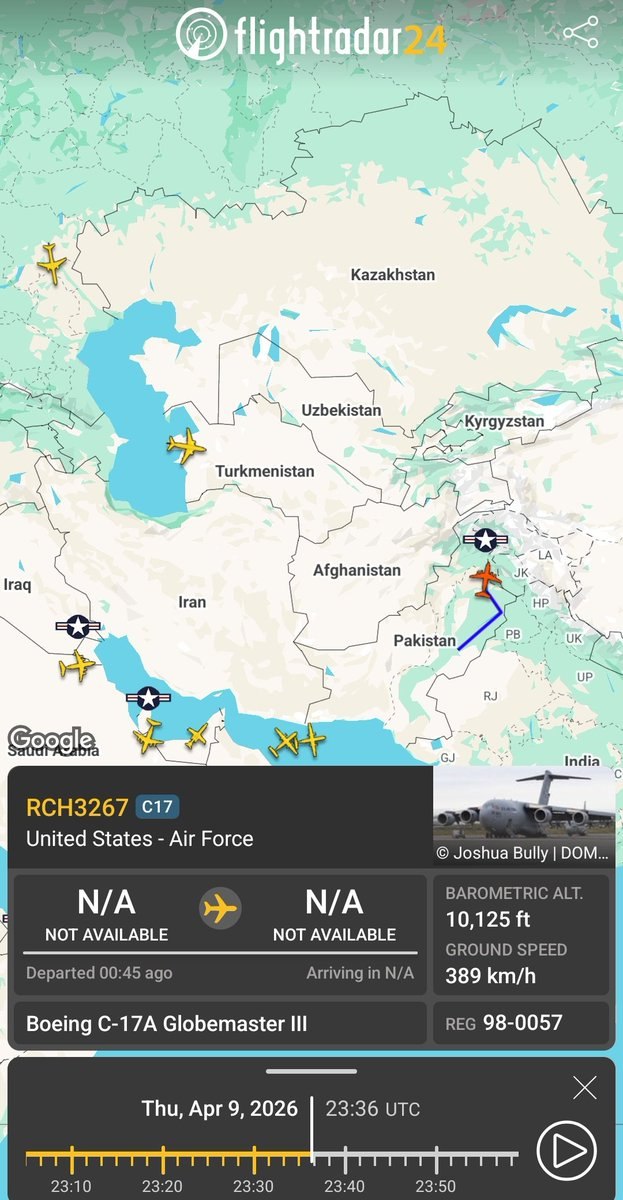
At 00:17 UTC, a United States Air Force C‑17 Globemaster III (tail number RCH3267, reg 98‑0057) landed in Islamabad, Pakistan, after a transponder‑off flight from Ramstein Air Base, Germany, via McGuire AFB, New Jersey. The aircraft’s low‑observable profile and lack of transponder emissions suggest a sensitive diplomatic mission, possibly transporting a high‑level delegation amid heightened US‑Pakistan tensions over Iran peace negotiations. No kinetic activity was associated with the landing, but the event reflects the strategic use of air assets for political signaling.
"US Air Force C‑17 Lands in Islamabad from Germany" – monitor_the_situation, https://t.me/monitor_the_situation/9464
Collectively, these events illustrate a multi‑theater environment where kinetic operations—ranging from massive aerial bombardments to localized drone and rocket attacks—are intensifying. The convergence of state and non‑state actors employing a spectrum of weapons systems underscores the complexity of contemporary conflict dynamics.