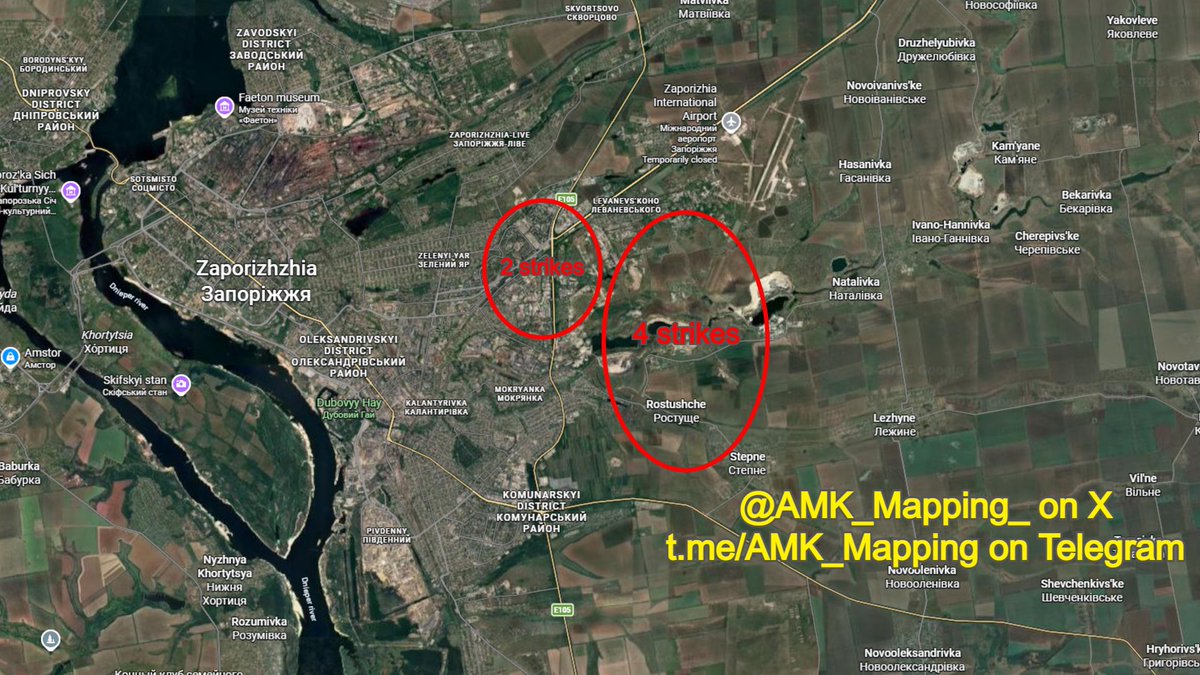
On 9 April 2026, Russian forces launched a high‑intensity rocket attack on the Ukrainian city of Zaporizhzhia, striking the eastern outskirts and the Shevchenkovskiy district with six Tornado‑S rockets. The same day, Israeli airstrikes in Gaza City killed four civilians, including Al Jazeera journalist Muhammad Washah, while hundreds of commercial vessels were immobilised in the Persian Gulf after the United States and Iran announced a cease‑fire that closed the Strait of Hormuz. These simultaneous events illustrate a rapid escalation of kinetic and non‑kinetic threats across three strategic regions, highlighting the interconnected nature of today’s security environment.
Ukraine: Tornado‑S Rocket Barrage in Zaporizhzhia
At 03:27 UTC, Russian artillery units fired a salvo of six Tornado‑S rockets toward Zaporizhzhia, a major industrial hub in southeastern Ukraine. The rockets impacted the city’s eastern periphery and the densely populated Shevchenkovskiy district, causing structural damage to residential blocks and a local school. Preliminary reports from the monitoring channel monitor_the_situation indicate that no fatalities were confirmed in the immediate aftermath, though several injuries were treated at nearby medical facilities. The use of the Tornado‑S system, a precision‑guided, long‑range rocket, underscores Russia’s intent to project firepower beyond the front lines and to pressure Ukrainian civil infrastructure.
Source: monitor_the_situation – "Russia Fires 6 Tornado‑S Rockets at Zaporizhzhia City, Ukraine" (https://t.me/monitor_the_situation/9246)
The attack arrives amid ongoing Ukrainian counter‑offensives in the south, where Kyiv has been reinforcing defensive positions around the Dnieper River. Analysts note that the timing of the strike—just after midnight local time—suggests a tactical aim to disrupt civilian morale and to test the resilience of Ukraine’s air‑defence network, which has been strained by sustained artillery exchanges along the front.
Gaza: Israeli Airstrikes Claim Journalist
Earlier that morning, at 00:11 UTC, the Israeli military conducted a series of airstrikes in Gaza City that resulted in four deaths, including Al Jazeera correspondent Muhammad Washah. The strikes targeted a residential block in the Al‑Rimal neighborhood, an area previously identified by Israeli intelligence as a hub for Hamas command and control. While the Israeli Ministry of Defense did not disclose the specific munitions used, the operation aligns with a pattern of precision strikes employing guided bombs and missiles to neutralise high‑value targets.
Source: JPost – "Israeli strikes in Gaza kill four, including Al Jazeera journalist, Gazan medics say" (https://www.jpost.com/israel-news/defense-news/article-892401)
The loss of a journalist has drawn renewed international attention to the conflict’s media environment. Al Jazeera reported that Washah was embedded with local medical volunteers when the strike occurred, emphasizing the difficulty of distinguishing combatants from civilians in densely populated urban settings. The incident adds to a cumulative death toll that, according to United Nations estimates, now exceeds 30,000 Palestinians since the latest escalation began in October 2025.
Persian Gulf: Maritime Gridlock Amid US‑Iran Ceasefire
At 03:01 UTC, the monitoring channel monitor_the_situation reported that more than 500 commercial vessels—comprising 426 oil tankers and 53 gas carriers—remain stranded in the Persian Gulf and adjacent international waters. The immobilisation follows a sudden cease‑fire declaration between the United States and Iran, which led to the immediate closure of the Strait of Hormuz, one of the world’s most critical chokepoints for oil transit. The shutdown has halted the flow of an estimated 20 million barrels of crude per day, prompting a sharp rise in spot prices and raising concerns about supply chain disruptions for global energy markets.
Source: monitor_the_situation – "Hundreds of ships including 426 oil tankers and 53 gas carriers are stranded in the Gulf region due to disruptions from the US‑Iran ceasefire and the closure of the Strait of Hormuz" (https://t.me/monitor_the_situation/9239)
Maritime authorities from the United Arab Emirates, Saudi Arabia, and Oman have issued advisories urging vessels to seek anchorage in designated safe zones while diplomatic channels negotiate a reopening protocol. The situation illustrates how geopolitical brinkmanship can translate into immediate economic consequences, extending the conflict’s impact beyond the battlefield to global trade and energy security.
Collectively, these three high‑intensity events demonstrate a pattern of simultaneous escalation across disparate theaters. The use of advanced precision weapons in Ukraine, targeted airstrikes in Gaza, and the strategic leverage of maritime chokepoints in the Persian Gulf reveal a convergence of conventional and hybrid tactics that challenge existing security frameworks. As state and non‑state actors continue to operate in overlapping domains, the risk of inadvertent spill‑over and broader destabilisation grows, underscoring the need for coordinated diplomatic and defensive responses.