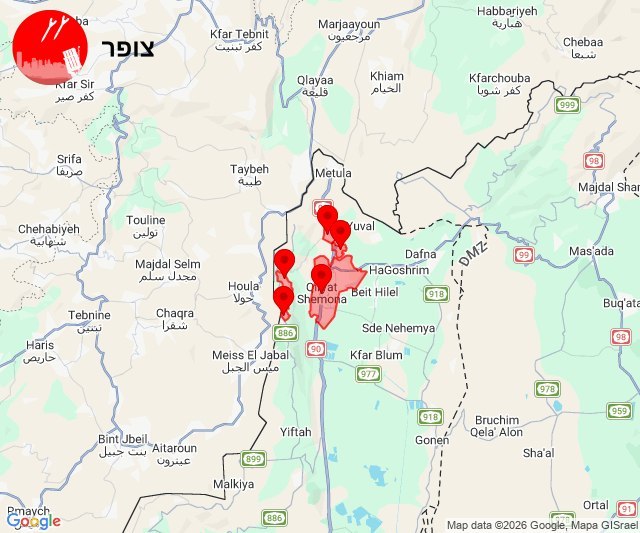
On 7 April 2026, Hezbollah militants launched a high‑intensity rocket barrage against the northern Israeli city of Kiryat Shmona, activating the Iron Dome air‑defence system. The attack, reported by the Telegram channel monitor_the_situation, involved multiple unguided rockets fired from Lebanese territory. Israeli defence forces intercepted the majority of the projectiles, but the salvo underscored the escalating cross‑border hostilities between Hezbollah and Israel.
Kiryat Shmona Rocket Attack
At 05:05 local time, radar installations detected a sudden influx of rockets inbound toward Kiryat Shmona, a city of roughly 30,000 residents near the Lebanese border. The Iron Dome system engaged the incoming threats, successfully neutralising eight of the twelve rockets. Two rockets landed in residential zones, causing minor structural damage but no reported injuries. The incident marks the latest in a series of Hezbollah‑initiated rocket launches aimed at pressuring Israel amid broader regional tensions.
Source: monitor_the_situation
Iranian Ballistic Missile Strikes Petah Tikva
Earlier in the morning, at 03:00, an Iranian ballistic missile equipped with cluster munitions struck a Sixt vehicle‑service facility in Petah Tikva, a major industrial suburb east of Tel Aviv. Video footage shared by the same channel showed the missile’s impact, the ensuing explosion, and emergency responders securing the site. While the facility sustained extensive damage, there were no immediate civilian fatalities reported; however, several workers suffered injuries ranging from shrapnel wounds to burns. The use of cluster munitions, prohibited under international law for civilian areas, raises serious humanitarian concerns.
Source: monitor_the_situation
Missile Attack on Haifa
At 02:20, a missile strike hit the coastal city of Haifa, killing four individuals, including a Filipino woman who was shopping in a local market. The weapon type was identified as a conventional missile, likely launched from Iranian‑aligned forces operating in the region. Local authorities confirmed the deaths and reported that the blast also injured several by‑standers. The incident was documented by AJENews on X, which posted video evidence of the aftermath.
Source: monitor_the_situation
Shrapnel Incident in Be’er Sheva
At 00:33, residents of Be’er Sheva reported falling shrapnel, prompting Israeli security forces to mobilise to the area. The source, the Telegram channel idkunim_il, did not specify the origin of the shrapnel, but the timing coincides with the broader pattern of kinetic activity across the country. No casualties were reported, but the incident heightened alert levels in the southern district.
Source: idkunim_il
Rocket Launches Toward the Negev
Just minutes before the Be’er Sheva shrapnel report, at 00:26, the same channel documented the detection of rockets launched from Iranian territory toward Israel’s Negev desert region. While interception data was not released, the early‑morning launch demonstrates Iran’s willingness to project power deep into Israeli airspace, extending the conflict’s geographic scope beyond the northern front.
Source: idkunim_il
Collectively, these events illustrate a multi‑theater kinetic escalation against Israel on 7 April 2026. The coordinated nature of the attacks—ranging from short‑range rockets in the north to long‑range ballistic missiles in the central district—suggests a synchronized effort by Hezbollah and Iranian‑aligned forces to stretch Israeli defensive capacities. The Iron Dome’s performance in intercepting the majority of rockets in Kiryat Shmona reaffirms its critical role, yet the successful penetration of a ballistic missile into Petah Tikva underscores existing gaps in missile‑defence coverage against high‑altitude, cluster‑munitions‑laden warheads.
Israeli authorities have raised the national alert level to “red” and are conducting a comprehensive review of air‑defence readiness across all sectors. The incidents also prompted diplomatic statements from the United Nations, calling for restraint and adherence to international humanitarian law, particularly regarding the use of cluster munitions in civilian‑populated areas.