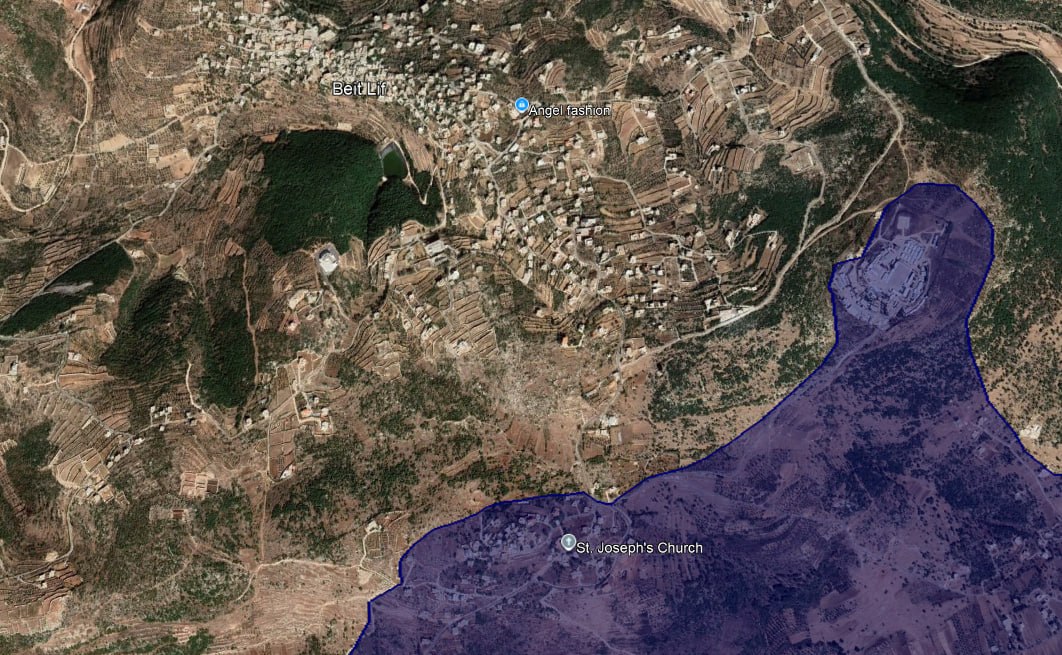
On 29 March 2026, an Israeli soldier was killed and several others wounded during direct combat with Hezbollah forces in southern Lebanon, marking the most lethal ground encounter recorded in the region this year. The clash, reported by monitor_the_situation at 06:22 UTC, occurred in the contested border zone and signaled a sharp intensification of kinetic operations following weeks of artillery and aerial activity.
Ground Combat Escalation
Hezbollah’s engagement with Israeli troops continued throughout the day. At 20:05 UTC, the group launched a coordinated raid on an IDF position in Maroun AlRas, employing rifles, machine guns, sniper rifles and rocket‑propelled grenades (RPGs). The assault resulted in the destruction of a Merkava main battle tank and the death of its three‑person crew, according to a GeoPWatch dispatch (source).
"Hezbollah announces launching a raid on an IDF position in southern Lebanon's 'Maroun AlRas' at 22:00, engaging with them using Rifles, Machine guns, Sniper Rifles and RPGs, resulting in the destruction of a Merkava tank and killing its crew."
Subsequent ground movements reported by Al Jazeera and monitor_the_situation documented Israeli forces advancing toward the Litani River, a strategic line roughly 30 km north of the border. The Israeli Prime Minister, Benjamin Netanyahu, ordered an expansion of the buffer zone, a directive echoed in multiple intelligence feeds (Al Jazeera, intelslava).
Airstrike Campaign
Israeli air power intensified its operations across southern Lebanon. At 21:11 UTC, an airstrike in the same region killed five individuals, a development reported by monitor_the_situation (source). Earlier, at 15:36 UTC, an Israeli strike on Jezzine killed three Lebanese journalists—Ali Shoeib, Fatima Ftouni, and Mohammed, her cameraman brother—prompting public outcry in Beirut (source).
Additional strikes targeted civilian structures: a house in Abba was destroyed at 08:07 UTC, resulting in two fatalities (source); a car in Jezzine was hit at 00:28 UTC, killing four people, including two reporters and a cameraman (source).
Tank and Armored Vehicle Engagements
Hezbollah’s anti‑tank capabilities were demonstrated repeatedly. In Qouzah, the group claimed to have hit two Merkava tanks with anti‑tank guided missiles (ATGMs) and employed a kamikaze drone against evacuation reinforcements at 21:20 (source). Similar ATGM attacks were reported in Bayadah, Beit Lif, and Houla, often accompanied by artillery fire or FPV (first‑person view) drone strikes that targeted infantry units and additional armored assets.
Notably, at 14:35 UTC in Bayada, Hezbollah destroyed a Merkava tank using tandem‑warhead projectiles, setting the vehicle ablaze (source). In the same locality, a coordinated assault employed ATGMs, FPV drones, and small‑arms fire, resulting in casualties among Israeli infantry and prompting medevac helicopter deployments (source).
Rocket, UAV, and Artillery Activity
Rocket fire and unmanned aerial systems (UAS) added a further layer of volatility. The IDF reported destroying a ready‑to‑fire rocket launcher in the Beqaa Valley at 13:20 UTC, preventing a potential strike on Israeli territory (source). Conversely, Hezbollah launched rockets at an IDF paratrooper unit near the Litani River, killing one Israeli soldier and wounding three at 04:25 UTC (source).
UAV attacks were frequent. Hezbollah claimed the use of FPV drones to strike an Israeli HMMWV and a D9 bulldozer in central Khiam at 14:30 (source), and similar drones were reported hitting Merkava tanks in Qantara and Beit Lif later in the day.
Impact on UN Peacekeepers and Civilian Infrastructure
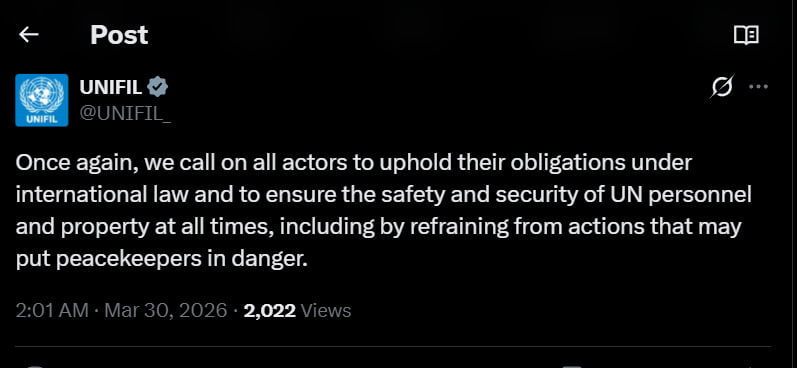
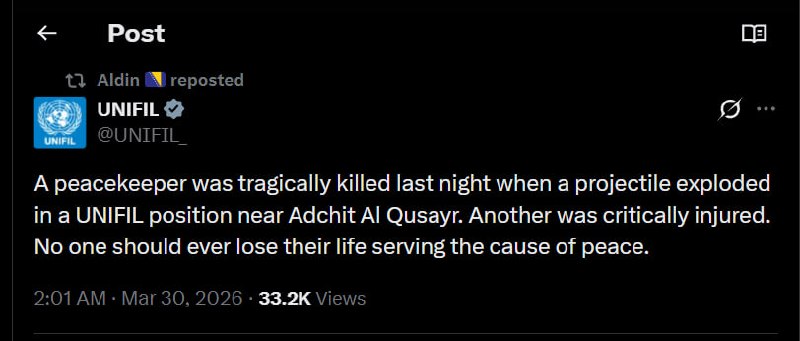
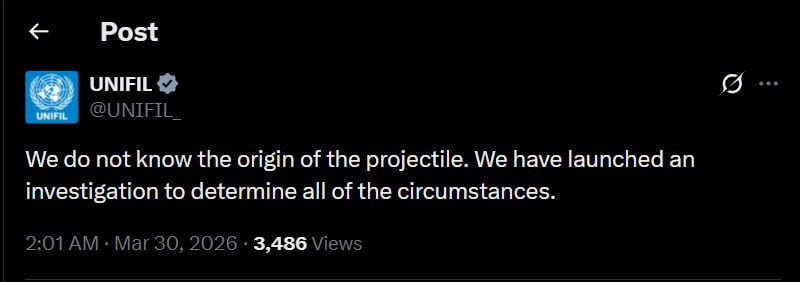
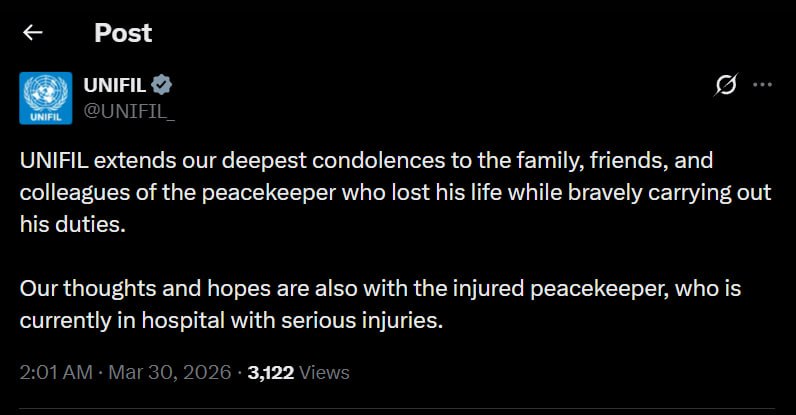
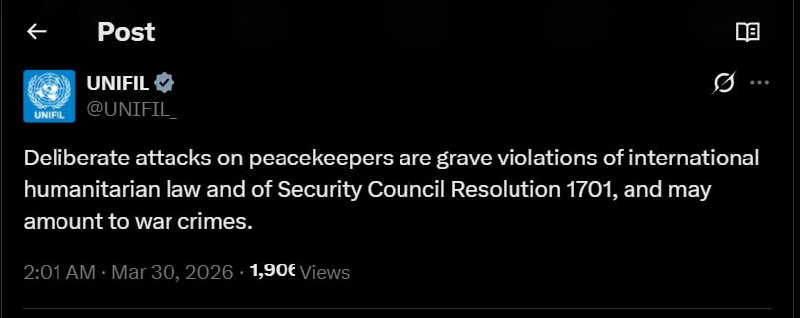
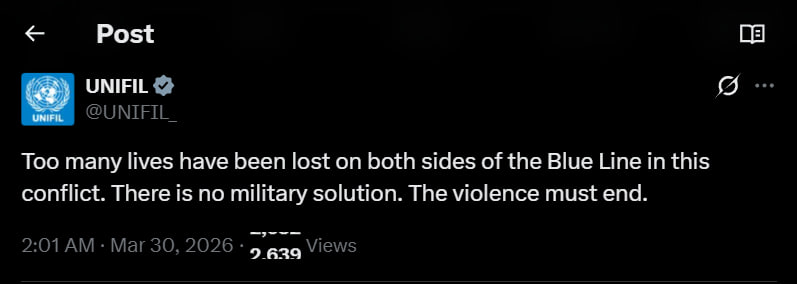
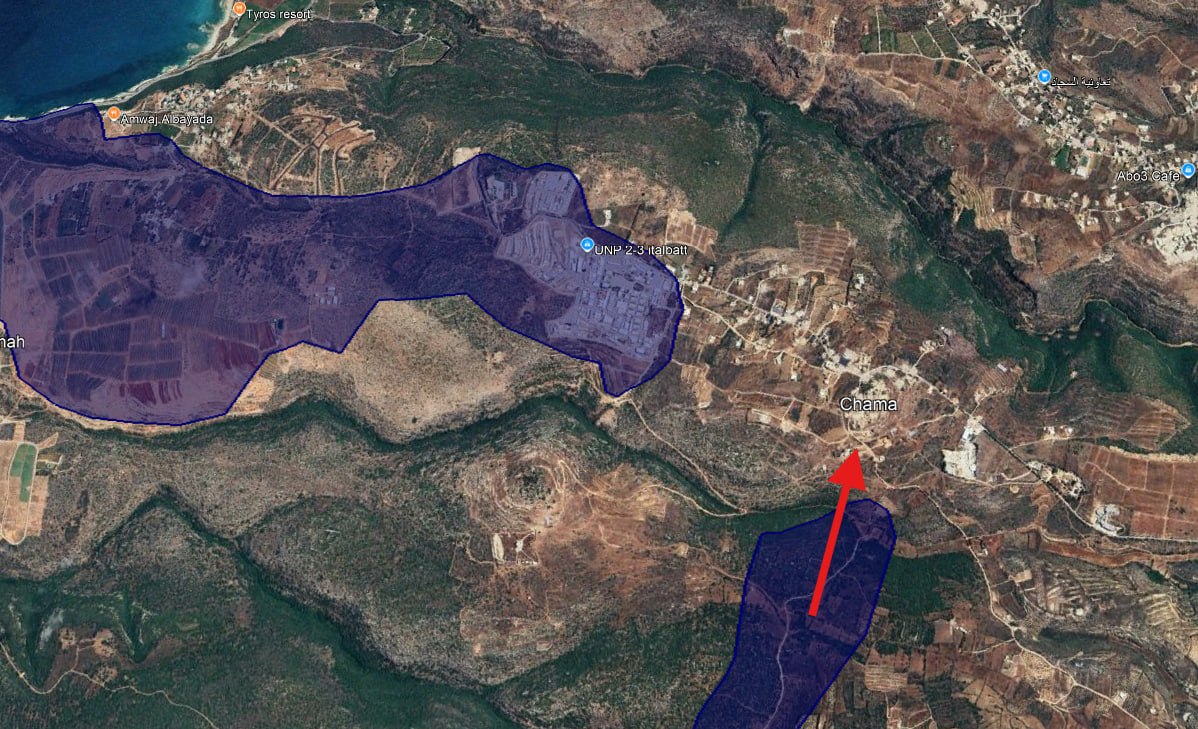
UNIFIL suffered casualties when a projectile exploded near Adchit al‑Qusayr, killing one peacekeeper and injuring another (BellumActaNews). Earlier, Israeli artillery struck a UN peacekeeper base in southern Lebanon at 20:25 UTC, raising concerns about the safety of international forces operating in the buffer zone (source).
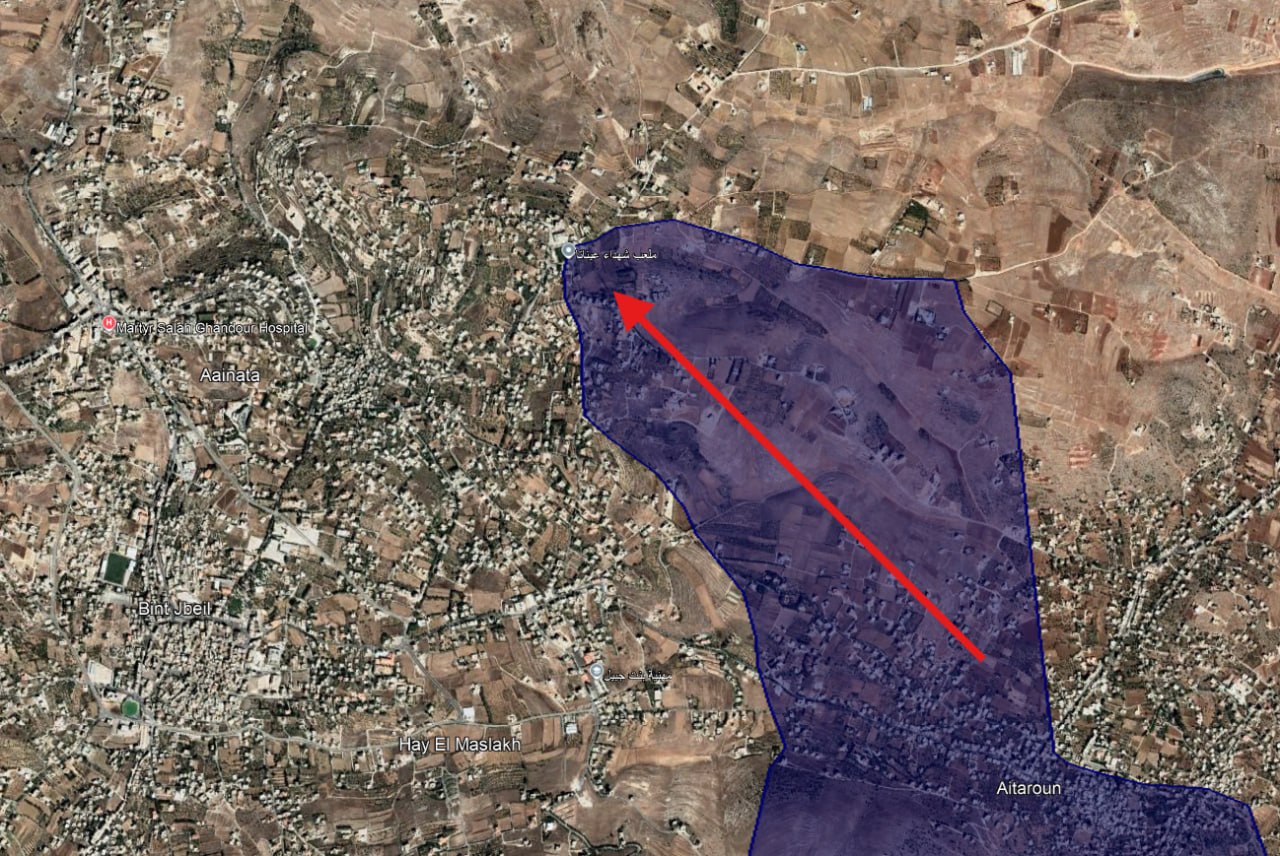
Medical facilities were also targeted. A strike near Bint Jbeil Hospital killed two paramedics, highlighting the growing risk to health‑care workers (source).
Overall Assessment
The series of events on 29 March 2026 illustrates a marked shift from intermittent artillery exchanges to sustained, multi‑domain kinetic operations. Ground engagements have produced the highest casualty figures for Israeli forces in the current phase, while Hezbollah’s use of ATGMs, FPV drones, and coordinated small‑arms attacks has demonstrated increased tactical sophistication. Israeli air power continues to target both military and civilian sites, contributing to a rising civilian death toll and complicating humanitarian access.
These developments suggest that the conflict is moving toward a more conventional battlefield dynamic, with both sides employing combined‑arms tactics that raise the risk of broader escalation.