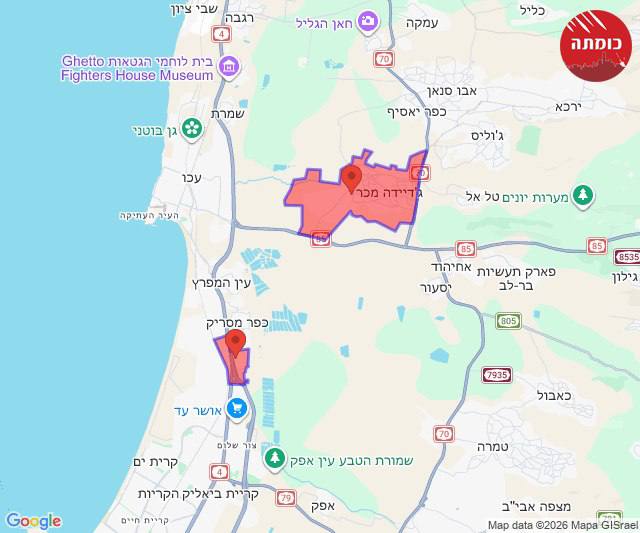
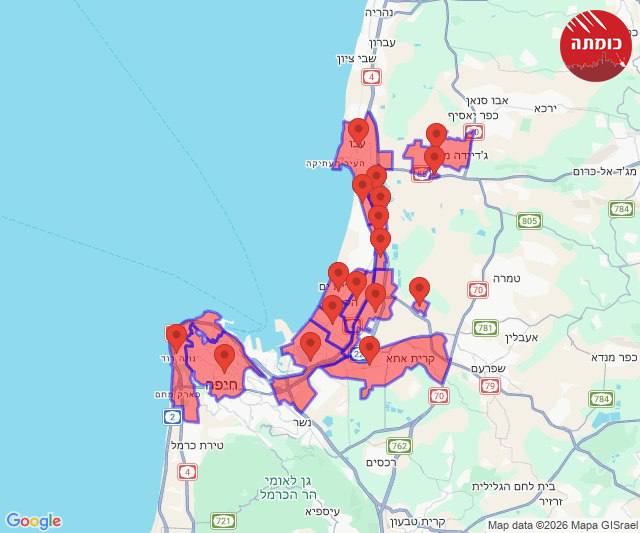
On 26 March 2026 a coordinated series of Iranian missile strikes struck Tel Aviv, Kafr Qasim, Haifa and Petah Tikva, injuring 149 civilians and prompting a massive emergency response. The attacks, reported by the monitor_the_situation channel, represent the most severe kinetic event in Israel for the day and underscore the heightened risk of state‑level missile exchanges in the region.
Critical Missile Strikes in Tel Aviv and Surrounding Cities
According to the health ministry, 149 people sustained injuries ranging from minor shrapnel wounds to serious trauma. Video evidence posted on the monitor_the_situation Telegram feed (source) shows explosions and smoke plumes over Tel Aviv’s central districts, while secondary impacts were documented in Kafr Qasim, Haifa and Petah Tikva. No fatalities were confirmed at the time of reporting, but the volume of sub‑munitions suggests a high‑capacity cluster warhead was employed.
"Iranian missile strikes caused damage in Tel Aviv, Kafr Qasim, Haifa, and Petah Tikva, with Israel's health ministry reporting 149 injuries over 24 hours." – monitor_the_situation
Iranian Ballistic Missile Over the Negev Desert
Later that evening, at 23:58 UTC, Iran launched a Khorramshahr‑4 medium‑range ballistic missile equipped with a cluster warhead toward the Negev Desert. The launch was captured on video by monitor_the_situation (source), showing the missile’s trajectory and the release of sub‑munitions over the desert. While the missile did not strike populated areas, the deployment of a cluster warhead marks a tactical escalation, indicating Iran’s intent to increase payload dispersion in future strikes.
Visual Confirmation of Iranian Cluster Missile Over Tel Aviv
At 23:56 UTC, rnintel posted a video confirming an Iranian cluster missile flying over Tel Aviv. The footage corroborates earlier reports of missile activity in the city and provides visual evidence of the missile’s flight path before interception attempts were initiated.
"Visual confirmation of an Iranian cluster missile over Tel Aviv." – rnintel
Hezbollah Rocket and Drone Campaign in Northern Israel
Hezbollah intensified its cross‑border operations throughout the day. At 20:36 UTC, a Hezbollah rocket strike in Nahariya killed Ori Peretz and injured at least three others, as reported by idkunim_il (source). Subsequent rocket barrages targeted the northern city of Krayot at 10:01 UTC, prompting the Iron Dome system to intercept the projectiles without reported casualties (source).
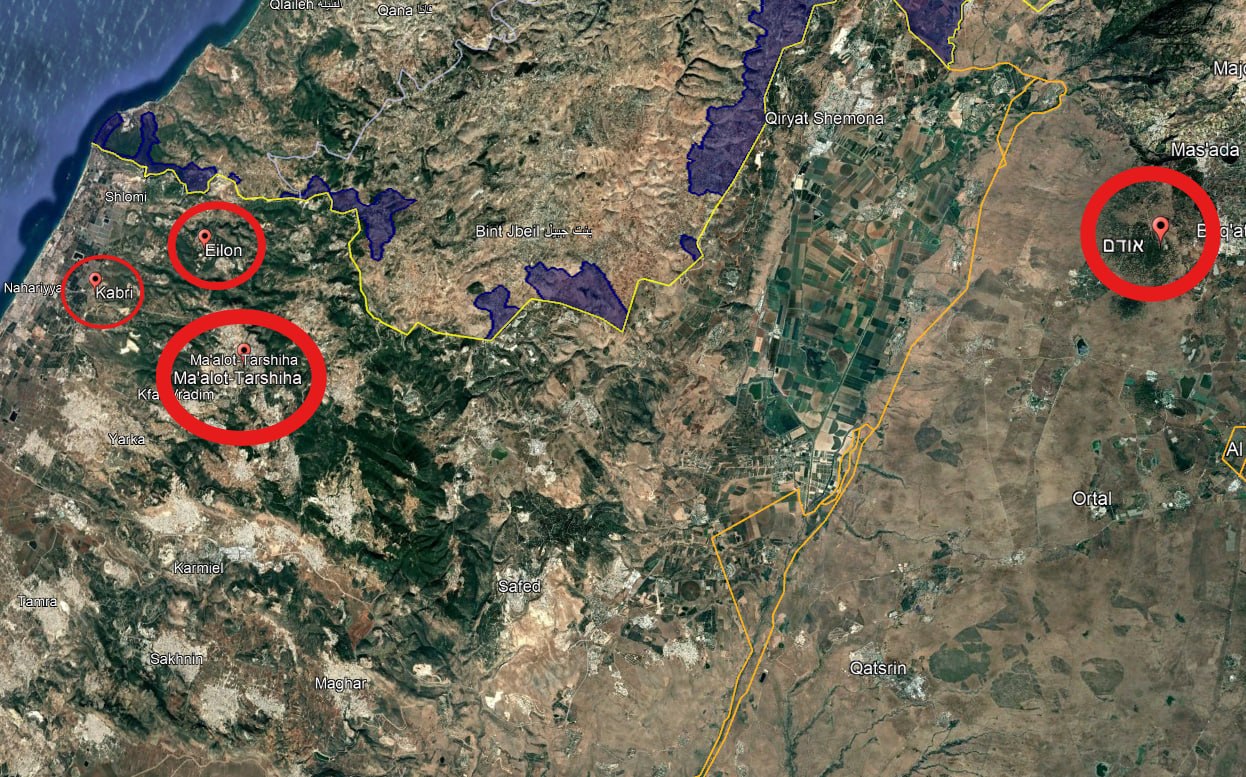
Hezbollah also employed unmanned aerial systems. At 09:09 UTC, a Hezbollah‑launched drone struck the town of Liman in northern Israel, with video evidence posted by monitor_the_situation (source). Additional drone threats were announced for Odem, Ma'alot Tarshiha, Elon and Kabri, with scheduled kamikaze attacks at four specific times (source).
Israeli Air‑Defence Interceptions
Israel’s layered air‑defence network responded aggressively. At 09:10 UTC, a ballistic missile carrying four 100 kg warheads aimed at Tel Aviv was intercepted, preventing fragmentation over the city (source). Earlier, at 07:17 UTC, an Iranian attack over Jerusalem was also neutralised (source). Throughout the day, multiple rocket salvos from Lebanon were shot down over central Israel, as documented by monitor_the_situation (source).
Israeli Counter‑Strike Preparations
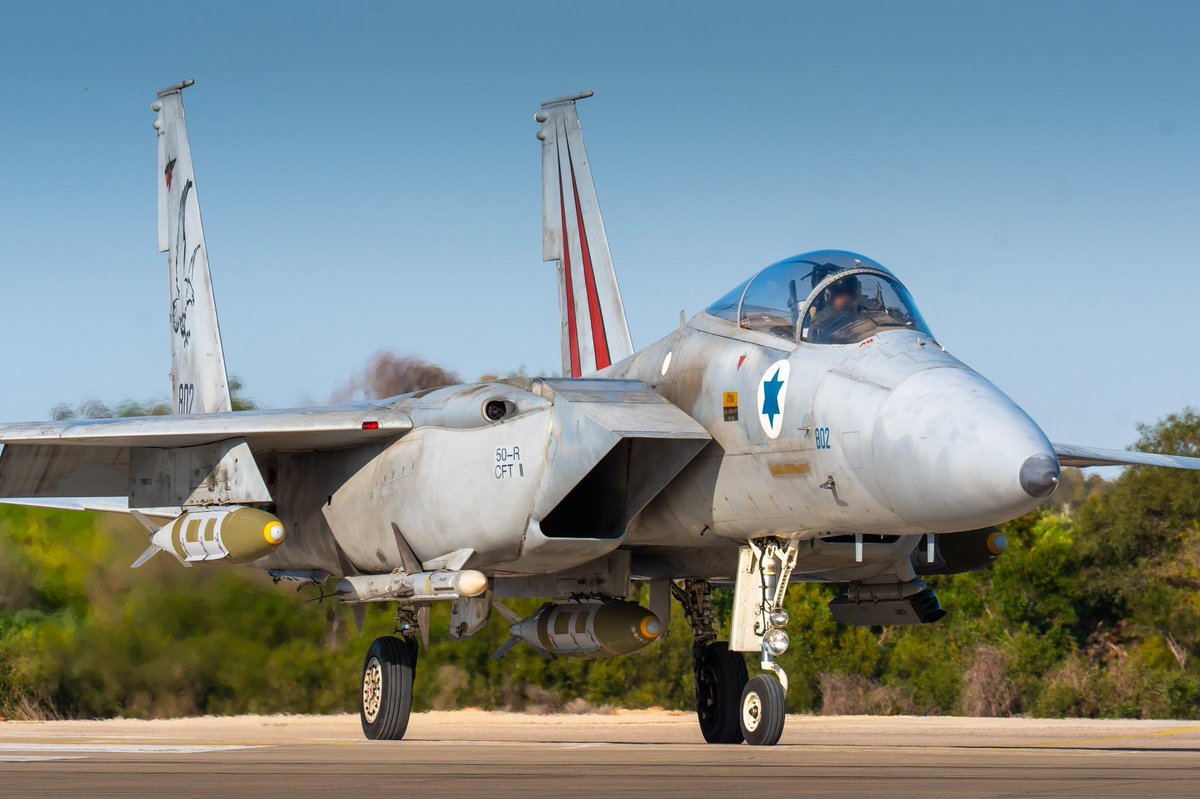
In response to the escalating missile threat, the Israeli Air Force dispatched an F‑15C fighter from Tel Aviv at 20:03 UTC, carrying JDAM precision bombs and an AIM‑7 Sparrow missile for a prospective strike mission against Iranian targets (source). While the sortie’s target was not disclosed, the deployment of legacy yet capable aircraft underscores Israel’s readiness to conduct retaliatory operations.
Widespread Civilian Alerts and Infrastructure Impacts
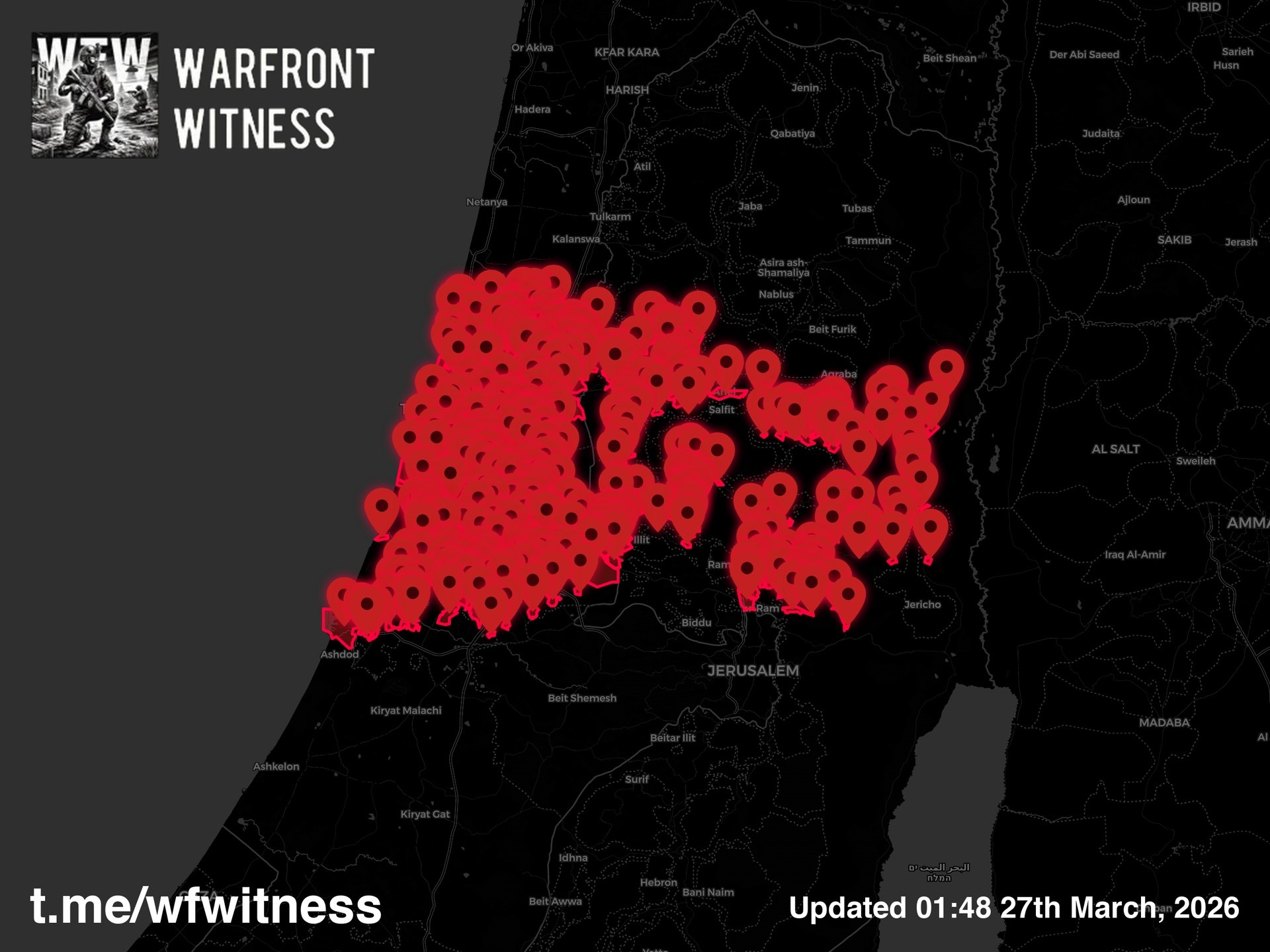
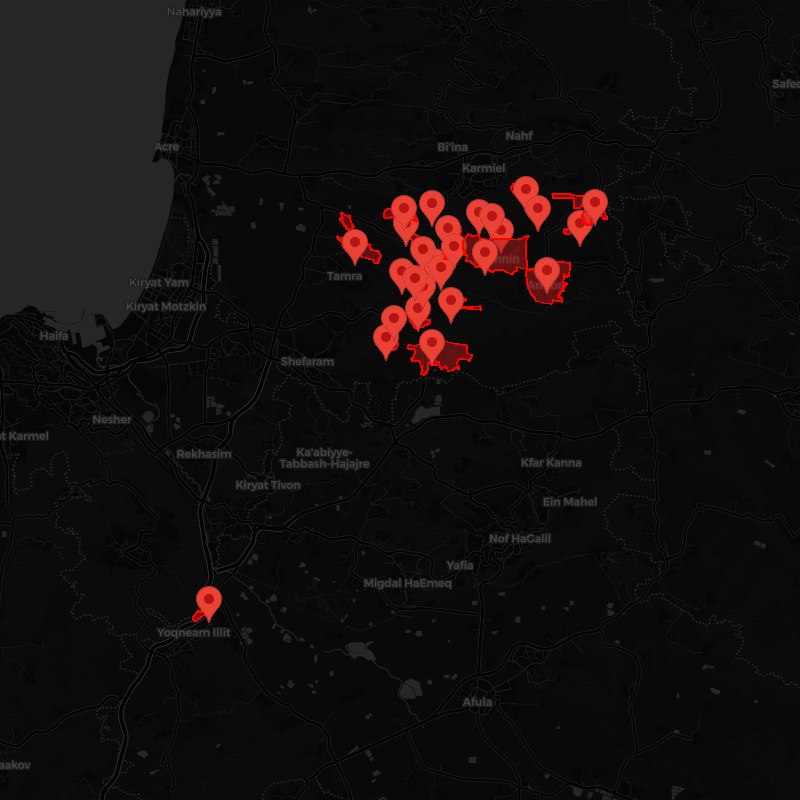
Home Front Command issued a red alert at 06:32 UTC, warning of imminent rocket launches across multiple regions, including Dan, Yarkon, Jerusalem and the Samaria corridor (source). Rocket alerts proliferated across the Galilee, central districts and the West Bank, with over thirty localities receiving red or amber warnings throughout the day (source). In Kafr Qasim, a missile sub‑munition flipped a parked car, and in Liman, debris from Iranian missiles coincided with a hostile drone strike, illustrating the multi‑vector nature of the threats.
Strategic Implications
The coordinated use of ballistic missiles, cluster warheads and drones by Iran and Hezbollah signals a shift toward more complex, high‑payload attacks on Israeli territory. Israel’s rapid interception record demonstrates robust defensive capabilities, yet the volume of incoming munitions strained the Iron Dome and Arrow systems, raising questions about long‑term sustainability of current defence postures. The lethal outcome in Nahariya, the first civilian fatality recorded on 26 March, highlights the human cost of these kinetic exchanges.